

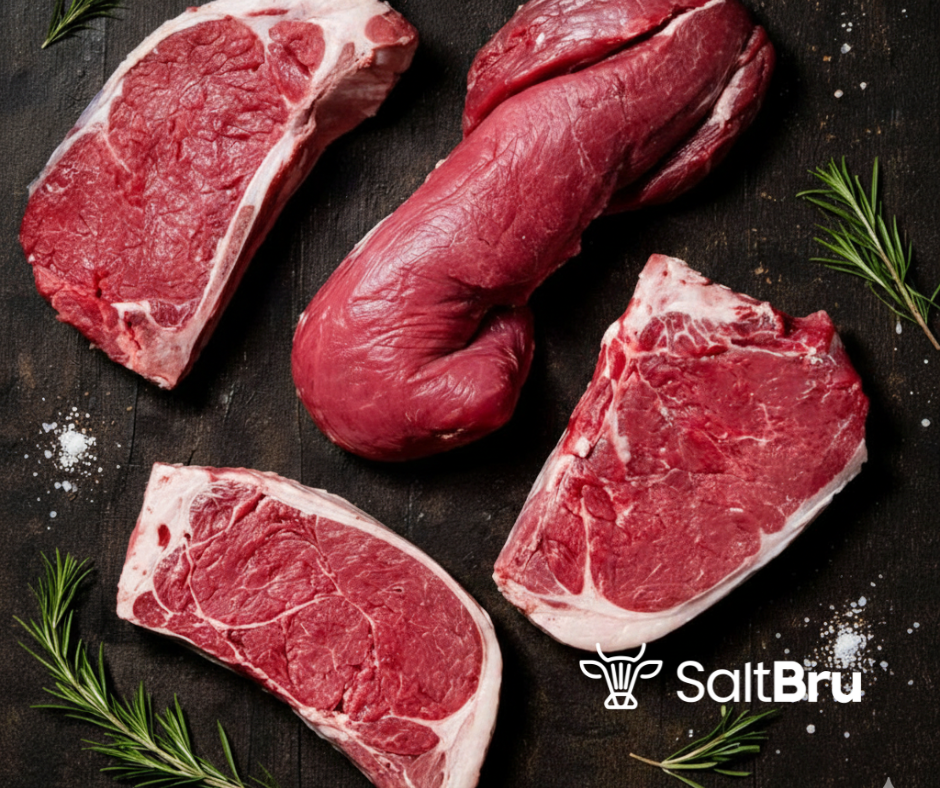
It’s definitely a sensory treat to shop at SaltBru. A tale of tradition is told by the sight of marbled meat and the specific equipment used in the trade. However, if you are unsure which cut best fits your evening plans, standing in front of the display case might also feel a little daunting. Understanding how texture, fat content, and muscle utilisation affect the final bite on your plate is crucial to selecting the ideal steak. Knowledge of these basic cuts is essential if you want to improve your home cooking. Not sure where to begin? We’ve got you covered.
Flavour Anatomy
Firstly, let’s learn the origin of the meat. The amount of labour a muscle puts in over an animal’s life primarily determines its flavour and tenderness. Regularly moving muscles, such as those in the neck or legs, are often harder but have a strong meaty flavour. On the other hand, relatively little heavy lifting is done by the muscles along the back. Our finest steaks are found here. Knowing that every cut has a different ratio of richness to tenderness enables you to adjust your cooking technique to the meat’s particular characteristics.
Ribeye
For seasoned steak lovers, the ribeye is frequently their favourite. This steak, which is cut from the beef’s rib area, is well-known for its substantial marbling. The term “marbling” describes the white bits of intramuscular fat that melt while cooking. Because of the self-basting effect this produces, the meat remains extremely delicious and moist.
- Profile: Very soft, buttery, and intense.
- Texture: The ribeye has a soft mouthfeel and loose grain due to its high fat content.
- Preparation: High heat is ideal for this cut. The objective is to render the fat and produce a black, caramelised crust, whether you’re using a hot braai or a cast iron pan. It can withstand being cooked to medium because it is so fatty, allowing the marble inside to completely melt.
Sirloin
The sirloin, sometimes known as the “people’s steak,” is a great compromise. The animal’s back, more especially the sub primal region behind the ribs, is where it is cut. It typically has a thick “fat cap” along the border, although it doesn’t have as much internal marbling as a ribeye. This gives the steak a lot of flavour without making it seem weighty overall.
- Profile: Slightly thinner than a ribeye, but still robust and meaty.
- Texture: Its tighter, harder grain gives it a pleasing “chew” that many people find appealing.
- Preparation: Sirloin is quite adaptable. It works well when sliced thin for salads or stir-frying, but it’s also great for grilling or pan-searing. For optimal results, grill the steak on its side until the fat cap is crispy and brown.
Fillet
The fillet, also known as filet mignon, is the best option if softness is your main concern. The tenderloin, a little muscle hidden beneath the ribs, is the source of this cut. This muscle is the most delicate element of the animal because it hardly ever works. It cuts through with very little effort and is beautiful and lean.
- Profile: Extremely elegant, delicate, and mild.
- Texture: Melt-in-your-mouth buttery. It emphasizes a smooth consistency over the substantial fat of a ribeye.
- Preparation: Because the fillet is so skinny, overcooking it might cause it to dry out rapidly. Rare or medium rare is the ideal serving. Its flavour is more delicate than that of sirloin or ribeye, making it the ideal vehicle for compound butter, red wine reduction, or peppercorn sauce.
Knowing the Distinctions
What matters most to you in a meal will determine which of these three you choose. When making your choice in the SaltBru check-out, refer to this table:
| Feature | Ribeye | Sirloin | Fillet |
| Fat Content | Very High | Moderate | Very Low |
| Tenderness | High | Moderate | Superior |
| Flavour | Strong/Buttery | Deep/Beefy | Subtle/Mild |
| Firmness | Medium Rare to Medium | Medium Rare | Rare to Medium Rare |
The Role of Bone and Fat
Fat is frequently used interchangeably with flavour in the butchering industry. It feels so luscious because the intramuscular fat in a ribeye lubricates the muscle fibres. The sirloin, on the other hand, gets its moisture from its exterior fat.
These incisions could even appear “on the bone.” Even more depth can be found in a bone-in ribeye (commonly referred to as a Cowboy Steak) or a T-Bone (which includes both the fillet and the sirloin). The bone releases marrow-like liquids that intensify the dish’s overall flavour and transfers heat through the meat’s interior.
Resting and Seasoning
Whichever cut you decide on, there are two unchangeable rules:
- Salt Early: At least forty minutes prior to cooking, liberally season your steak with sea salt. In this way, the flesh is seasoned from the inside out by drawing out moisture, dissolving the salt in a brine, and then reabsorbing it.
- Never bite into a steak as soon as it comes off the fire; the rest is crucial. The muscle fibres can relax and absorb the fluids while they are at least 10 minutes of rest. These mouthwatering fluids will end up on the cutting board rather than in your mouth if you cut it too soon.
Last Tips
- Try a different cut each time you go. For a weekend barbecue, you might yearn for the rough fat of a ribeye, but for a romantic night, you might prefer the lean elegance of a fillet.
- Reach out to us: We at SaltBru are available to assist you. Simply specify if you want a particular thickness or quantity of fat removed. Cutting is an art that requires teamwork.
- Quality Matters: The cattle’s nutrition and breed have a big influence on the flavour. Selecting premium, locally sourced beef guarantees that even the most basic preparation will produce an amazing meal.
Ready to take your next meal to the next level?
Every click to SaltBru becomes a chance for learning as you become proficient in the art of the cut. You can design dining experiences that are ideal for your palate by comprehending the unique personalities of the Fillet, Sirloin, and Ribeye. Let the meat’s quality be the main attraction, whether you’re entertaining guests or having a quiet evening at home.