

A unique sensory sensation is the smell of a high-quality steak hitting a hot cast iron pan. We know that the key to a top-notch dinner begins long before the fire is started in South Africa, where the braai is more than just a cooking technique—it’s a way of life. You must consider the science underlying the meat if you want to meet that “Quality First” standard at home.
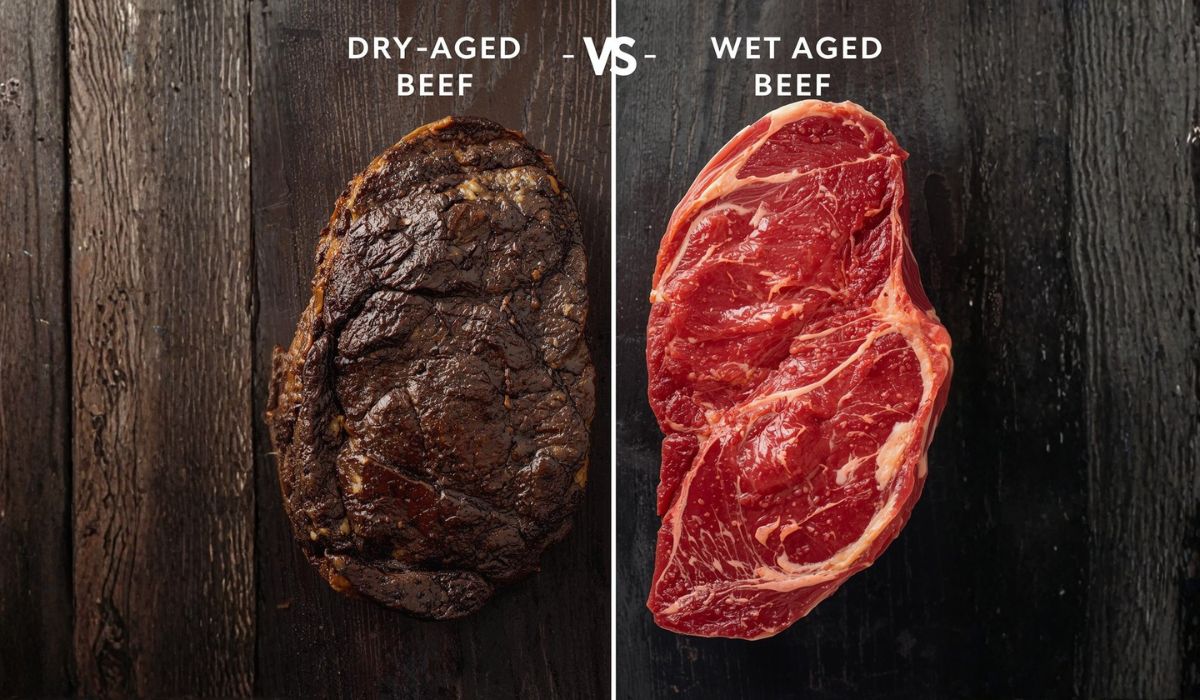
Aging-related queries are among the most common ones we receive at the SaltBru counter. Why is it important? What actually distinguishes wet-aged meat from dry-aged beef? Although the goal of both techniques is to enhance the meat, the flavour, texture, and cost are drastically different. To help you select the ideal cut for your upcoming gourmet event, this guide will walk you through the subtleties of both methods.
Aging Science
Aging is the process by which the connective tissue in cattle is broken down by natural enzymes. Depending on the technique, this process greatly improves the flavour profile while also making the meat softer. Even the priciest cut of beef may taste harsh or “metallic” if it isn’t aged.
Dry Aging
In the contemporary culinary world, dry aging—an ancient butchering custom—has had a huge comeback. A fantastic piece of beef is transformed into a work of beauty through a methodical, painstaking procedure.
Process: Whole sub primal cuts, such the sirloin or ribeye on the bone, are kept in a very regulated setting. The humidity must be carefully adjusted and the temperature must stay close to freezing. Air is continuously circulated around the meat by fans.
Transformation Time
- Tenderness: The stiff collagen and muscle fibres are broken down by natural enzymes, making the steak cut like butter.
- Flavour: The meat loses a lot of moisture (sometimes up to 30%) while it sits. The flavour of the beef is concentrated as a result of this water loss.
- Complex Profiles: Because the meat is exposed to air, the exterior crust frequently develops a controlled “good” mould. This produces aromatic overtones that are rich, nutty, and almost cheese-like, which are impossible to get in fresh meat.
Due to the “shrinkage” and labour required, dry aging is more costly. Before the steak is delivered to you, the butcher must remove the pellicle—the dry, black outer crust—which results in greater waste but a much higher-quality product.
Wet Aging
You have probably had wet aged beef if you have ever purchased a premium steak from a high-end retailer that was sealed in plastic. Today, this is the most widely utilized approach worldwide.
The Method The beef is portioned and put into vacuum-sealed bags shortly after it is killed. Over a few days or weeks, the meat matures in its own juices.
Transformation Time
- Texture: The enzymes continue to soften the fibres, much like dry aging. You’ll receive a delicious, incredibly tender steak.
- Flavour: The flavour stays “bright” and metallic because there is neither air contact nor moisture loss. It tastes like premium, fresh beef without the nutty, pungent taste of its dry-aged equivalent.
- Juiciness: Wet aged steaks frequently taste “wetter” or more juicy on the tongue since no water is lost, while some purists contend that this is simply extra water.
Choosing Your Cut
Use this brief cheat sheet to determine which is best for your table:
| Feature | Dry Aged Beef | Wet Aged Beef |
| Primary Flavour | “Nutty earthy intense beefiness” | “Fresh metallic traditional beef” |
| Texture | Firm but extremely tender | Soft and succulent |
| Best Cooking Method | Pan sear or Braai (Reverse Sear) | High heat grilling or Sous Vide |
| Best For | Special occasions, “Foodie” dinners | Weekly family meals, large groups |
Tips for Preparation
The manner you handle the meat at home is important, regardless of whether you pick dry or wet aged. To honour the butcher’s prior labour, employ these strategies:
- The Dry Brine: At least two hours prior to cooking, generously salt your meat. This makes it possible for the salt to penetrate the fibers and season the steak from the inside out.
- Tempering: Steak should never be cooked cold. Before cooking, take it out of the refrigerator at least 60 minutes. You will burn the outside before the inside is ready if the core is icy.
- The Maillard Reaction: Before heating your meat bone, pat it dry with a paper towel. The enemy of a nice crust is moisture.
Know The Right Temperatures
Aged beef is a high-end purchase. Don’t overcook it and destroy it. For SaltBru beef, use a digital thermometer and adhere to these final internal temperatures:
| How Cooked | Pull from heat at | Final Temp (after resting) |
| Rare | 118°F | 125°F |
| Medium- Rare | 126°F | 135°F |
| Medium | 140°F | 145°F |
Note: Due to dry aged beef’s low moisture content, we usually advise against cooking it past medium as it will quickly dry out if overheated.
Let It Rest
The process’s most overlooked step is this one. The liquids are under pressure when you take a steak off the griddle. The flavour spills across your board if you cut it right away.
Allow your steak to rest for five to ten minutes (or up to twenty minutes if it’s a large roast). As a result, the muscle fibres can relax and reabsorb those valuable fluids.
At SaltBru, we think that quality cannot be compromised, regardless of your preference for the dependable succulence of a wet-aged fillet or the intense, artisanal intricacy of a dry-aged ribeye. Let the aging process do the work for you when you begin your next culinary adventure with the appropriate cut.