

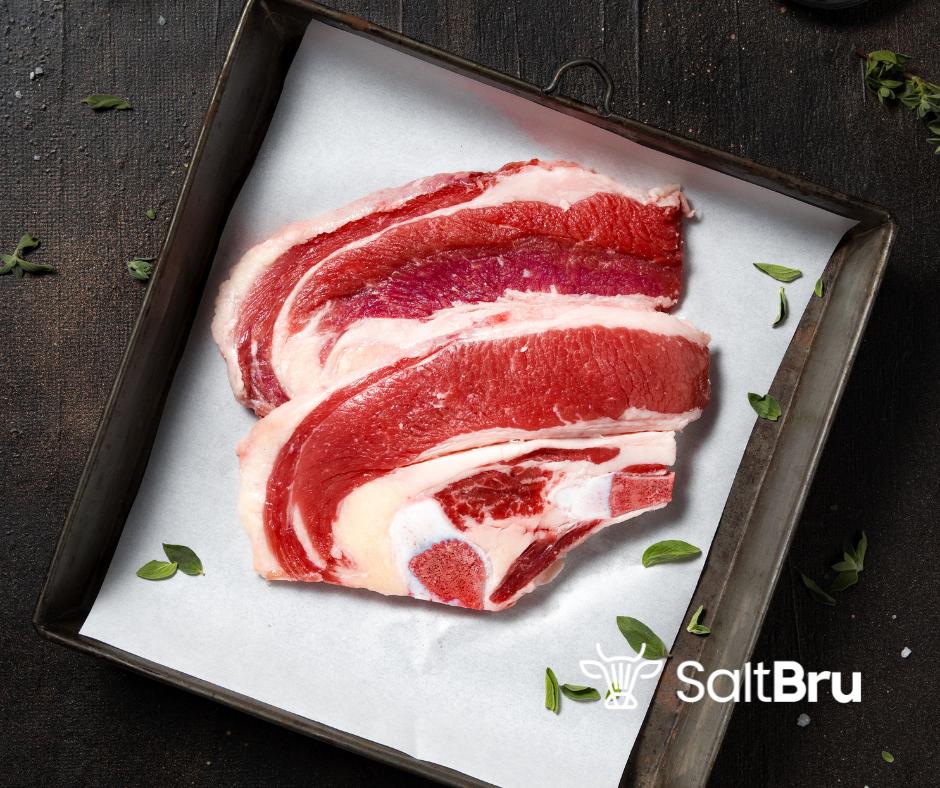
Have you ever noticed that a premium ribeye seems more like a delicate pattern of white veins than a monolithic block of red when you look at it? You are already halfway to learning the code of great beef if you have. The soul of the meat itself is defined by marbling, it is the culinary distinction between a meal that is fully enjoyed and one that is simply consumed.
At SaltBru, we think that the first step to being an expert griller is knowing your meat. It’s not simply fat that marbling is. It is the secret element that gives a basic protein a buttery, mouthwatering texture. Let’s examine the SaltBru science of this “white gold.”
The fatty flavour
Fat may appear to be something that should be cut off to those who are not familiar with it. But a real meat lover understands that fat isn’t all the same. At SaltBru, you will primarily come across two forms of fat: intramuscular fat (the tiny strands woven inside the muscle) and intermuscular fat (the thick layers located on the edges).
That intramuscular fat is especially referred to as marbling. The internal texture is determined by marbling, while the exterior fat caps act as a protective barrier during cooking. These small white particles start a stunning change as heat strikes the grid. They basically “self bast” the steak while it cooks because they melt from the inside out. Because the muscle fibres are lubricated throughout this procedure, each bite is juicy and has a deep, rich beef flavour.
The sizzle science
Why does a prime ribeye or Wagyu, which are heavily marbled cuts, taste so much better? It all boils down to the sear’s chemistry. Your coals’ heat reacts with the organic chemicals released by the marbling as it renders. This keeps the inside delicate while also promoting the Maillard process, which gives us that beautiful brown crust we all want.
A steak without marbling is totally dependent on its inherent moisture content, which rapidly evaporates when heated to high temperatures. There is a very small difference between “perfect” and “shoe leather” in a lean cut. Marbling acts as a buffer. By preventing the meat from drying out, it forms a moisture barrier that makes cooking more flavourful and forgiving.
The role genetics and grass play
Excellent marbling is not a coincidence. It is the outcome of excellent genetics and careful husbandry. Respecting the animal’s growth cycle is a top priority for SaltBru.
- The genetic basis: Some breeds have an innate tendency to store energy in their muscles. For that reason, a well-bred Wagyu or Angus will always have more marbling than a slimmer breed.
- The final touch: Although our cattle live a life of grazing and roaming, the “finishing” phase is very important. The animal’s ability to generate those fine fat deposits gradually over a balanced diet guarantees that the marbling is uniform rather than clumpy.
- The stress factor: Contented cows yield better steak. Animals under a lot of stress may produce “dark cutters,” or tough meat with improperly developed marbling. We make sure the marbling you see is an indication of a healthy, well-cared-for cow by collaborating with ethical suppliers.
Picking Your Marble Level
Not all recipes call for the most marbling. select your marbling according to the outcome you want, much as you would select charcoal for a fast burger and Kameeldoring for a lengthy roast.
The best of high marble
The unchallenged master of marbling is Ribeye. This is the greatest option for people who enjoy a rich, buttery flavour because of the enormous “eye” of fat in the middle and the little specks scattered throughout. Like the ribeye, the Scotch fillet is frequently cut for a fancier appearance. For this cut to remain juicy during a high heat sear, its internal marbling is essential.
Equitable applicants
The cut known as sirloin (striploin) has a “beefier” chew. Although it features a well-known fat cap on the side, the internal marbling is typically less noticeable. For someone who prefers flavour without the ribeye’s aggressiveness, it strikes the ideal balance. You may have the best of both worlds with T-Bone and Porterhouse. One side gives you the marbled richness of the sirloin, while the other side gives you the lean tenderness of the fillet.
The Experts in Lean
The leanest premium cut is tenderloin, or fillet. It has a milder flavour but is extremely delicate because to its minimal marbling. For this reason, it is frequently wrapped in bacon or served with a thick sauce to provide the fat that the muscle naturally lacks.
Cooking advice for marbled meat
You want to handle a gorgeously marbled SaltBru cut with respect when you bring it home. To make those white flecks work for you, follow these steps:
- Don’t cook it cold: Before turning up the heat, always allow your marbled steak to reach room temperature. The outside of the meat will burn before the fat has had time to render properly if it is refrigerated.
- Season simply: You don’t need strong marinades because high marbling adds so much natural flavour. To bring out the best in the steak, sprinkle it liberally with coarse sea salt and cracked black pepper.
- The medium rare sweet spot: Marbled meat tastes best when cooked to medium rare or medium, although we respect everyone’s preferences. Enough heat is produced by this to melt the fat into the fibres. Rare cooking keeps the fat firm and “waxy.” The moisture that the fat worked so hard to provide is lost if it is cooked to perfection.
- Let it rest: After cooking, allow your steak to rest for at least half of its grilling time. By doing this, the rendered fat and fluids can redistribute and remain in the meat instead of dripping onto your plate.
Let’s feast!
The best sign of quality is marbling, which is a visual cue that the food will be delicious. It symbolises the meeting point of the butcher’s art, meticulous husbandry, and nature. Seek out the delicate white designs that resemble lace. That’s the flavour promise of SaltBru.