

When you scroll through the SaltBru storefront, you see the words wet-aged or dry-aged attached to premium cuts of beef. For the casual shopper, it is easy to assume this is just fancy marketing lingo designed to justify a higher price tag. But in the world of high-end butchery, aging is not a marketing trick. It is a precise, scientific transformation.
If you have ever wondered why a steak from a premium digital butchery tastes lightyears ahead of a standard supermarket packet, the secret lies in the dark.
Left entirely alone in a strictly controlled environment, a piece of beef goes through a fascinating biochemical evolution. Let us pull back the curtain on the science of aging and look at exactly what happens to your steak before it reaches the delivery van.
1. The Natural Tenderizers: Enzyme Activation
The moment a steak begins its aging journey, a crew of naturally occurring enzymes gets to work inside the muscle tissue:
- The Breakdown: These enzymes act like microscopic tenderizers, slowly breaking down the tough, tightly wound connective tissues and collagen fibres.
- The Texture Transformation: Over a period of twenty-one to twenty-eight days, this cellular breakdown relaxes the meat.
- The Result: The muscle fibres soften completely, transforming a cut that would otherwise be chewy into a buttery, melt-in-your-mouth steak.
2. Wet Aging vs. Dry Aging: Two Paths to Flavour
While both methods rely on time, they achieve completely different results based on how the environment is managed.
The Wet-Aging Method
This is the standard approach for most premium steaks. The beef is placed into a vacuum-sealed bag and kept at precise, near-freezing temperatures. Because no moisture can escape, the meat ages in its own natural juices. This preservation yields a steak that is incredibly juicy, tender, and clean in flavour, making it a reliable crowd-pleaser for a casual weekend braai.
The Dry-Aging Method
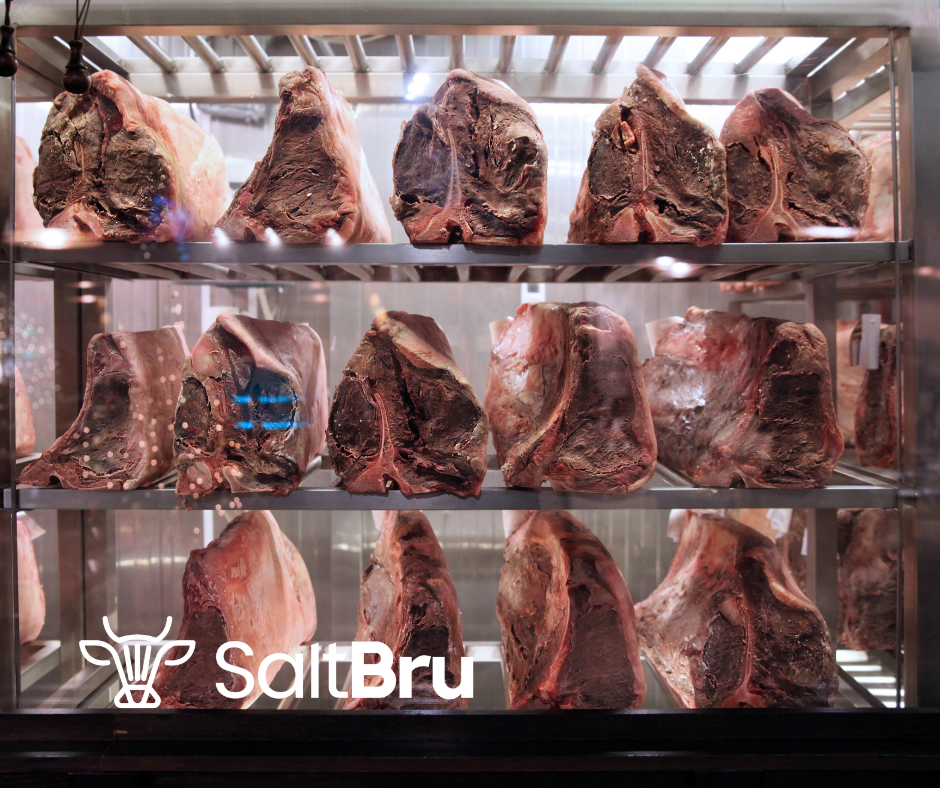
This is where the real culinary alchemy happens. The beef is hung completely bare in a specialized room with a constant flow of cold air and strict humidity controls.
During dry aging, the meat loses up to twenty percent of its water weight through evaporation, which concentrates the natural beef flavour into a rich, dense profile.
At the same time, beneficial ambient moulds cultivate on the exterior, introducing deep, complex flavour notes of roasted nuts, blue cheese, and earthy richness. The crusty exterior is carefully trimmed away by the butcher, leaving behind a rare, highly prized delicacy.
The Ultimate Payoff on the Grid
This dedication to time and science changes everything when the beef finally hits your kitchen or the hot coals, bru.
An aged steak contains significantly less surface water, which means you get an immediate, intense sear instead of a sad, grey steam effect in the pan. The sugars and amino acids caramelize instantly, creating a thick, mahogany crust that locks in every drop of concentrated flavour.
Next time you order your rump, ribeye, or T-bone from SaltBru, remember that you are not just buying a piece of raw protein. You are buying the culmination of weeks of careful craftsmanship and biochemical magic. Respect the process, get your skillet smoking hot, and taste the difference that time makes.